 Image 1 of 1
Most ABA goal banks were built with young children in mind. When you’re writing a treatment plan for a 16-year-old, that becomes obvious pretty quickly.
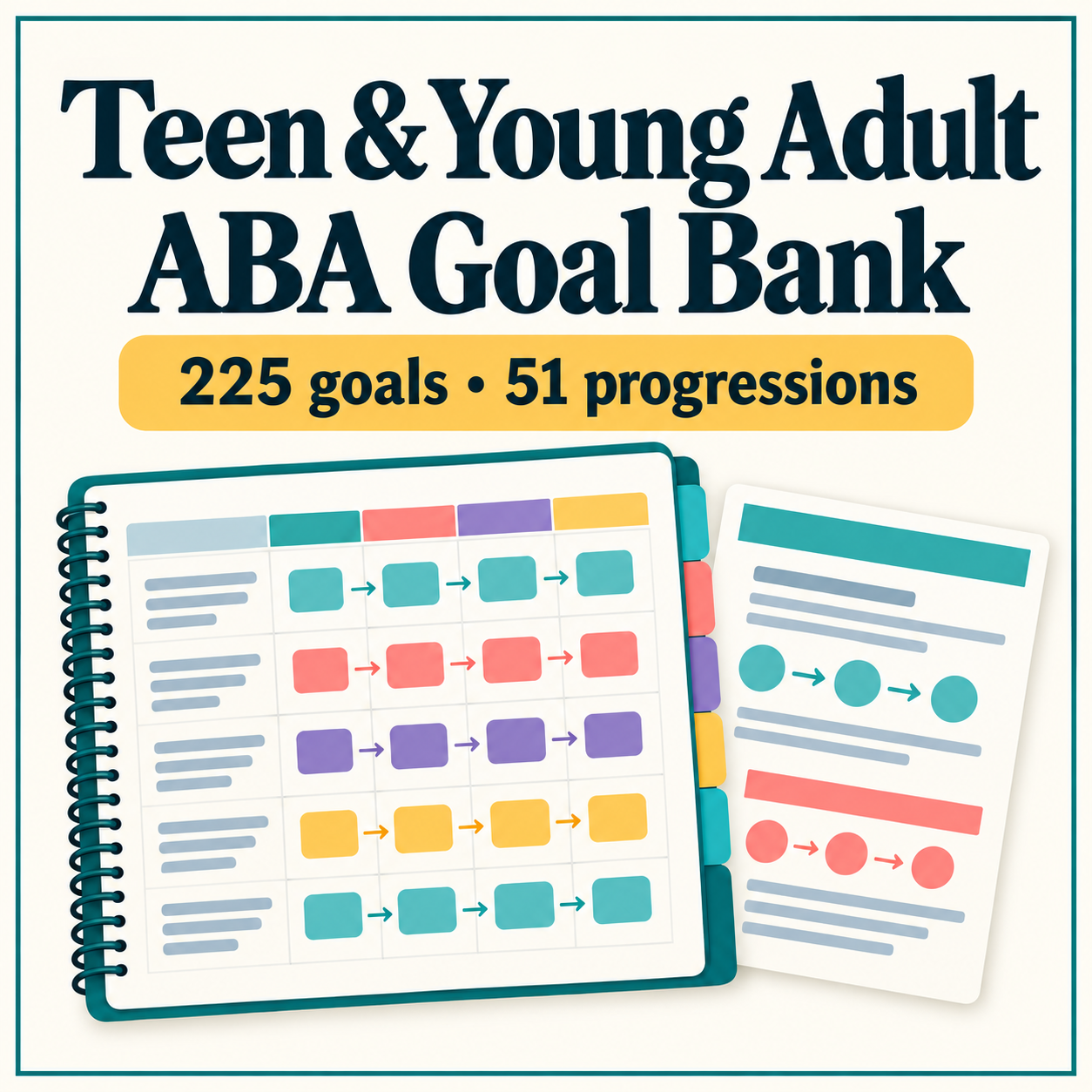
The Teen & Young Adult Autism ABA Goal Bank gives you a better starting point. It includes 225 editable goal templates organized into 51 skill progressions, so you can see how a skill might develop from a foundation to flexible use in everyday life.
Maybe your client is learning to communicate when they need help. Maybe they can ask for help in a familiar session, but struggle when the situation changes. The Progression Map helps you find a starting point and consider what comes next, based on the learner’s actual skills and support needs.
You can search the Excel workbook by skill stage, DSM criterion, life domain, setting, and more. Once you find a promising goal, the goal-selection view and treatment-planning worksheet help you adapt it to the learner. An included how-to guide walks you through the process with completed case examples, so you can see what individualization looks like beyond the blank fields.
These goals are meant to support your clinical judgment, not replace it. Use them to spend less time starting from scratch and more time writing goals that fit the person in front of you.
Most ABA goal banks were built with young children in mind. When you’re writing a treatment plan for a 16-year-old, that becomes obvious pretty quickly.
The Teen & Young Adult Autism ABA Goal Bank gives you a better starting point. It includes 225 editable goal templates organized into 51 skill progressions, so you can see how a skill might develop from a foundation to flexible use in everyday life.
Maybe your client is learning to communicate when they need help. Maybe they can ask for help in a familiar session, but struggle when the situation changes. The Progression Map helps you find a starting point and consider what comes next, based on the learner’s actual skills and support needs.
You can search the Excel workbook by skill stage, DSM criterion, life domain, setting, and more. Once you find a promising goal, the goal-selection view and treatment-planning worksheet help you adapt it to the learner. An included how-to guide walks you through the process with completed case examples, so you can see what individualization looks like beyond the blank fields.
These goals are meant to support your clinical judgment, not replace it. Use them to spend less time starting from scratch and more time writing goals that fit the person in front of you.